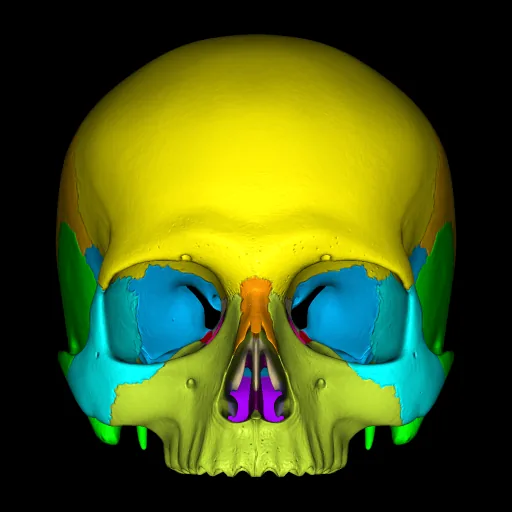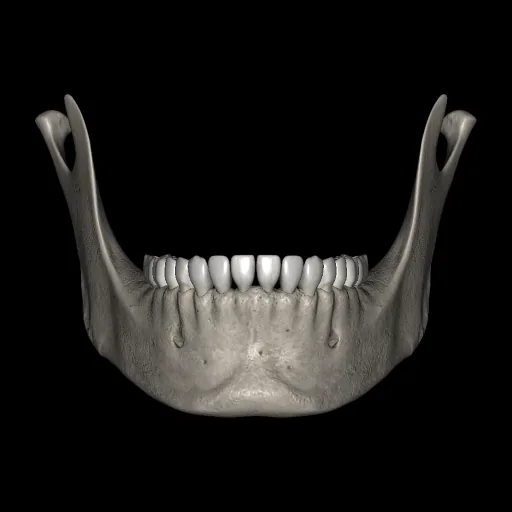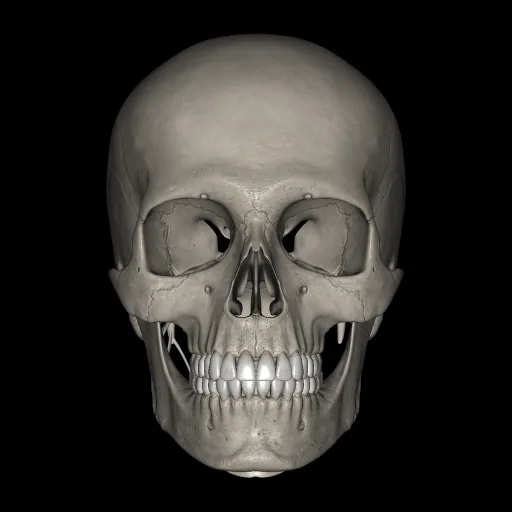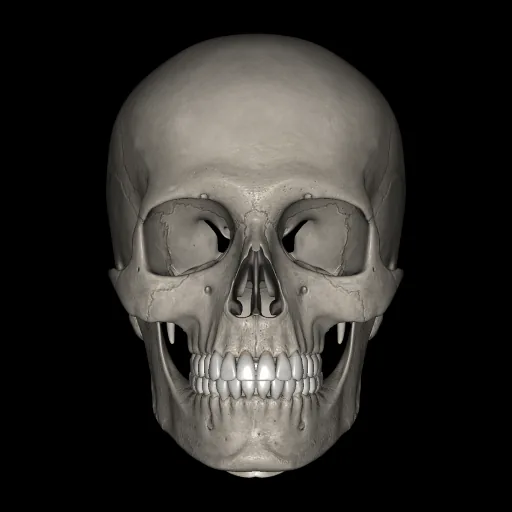
Head anatomy in 3D:
muscles and bones
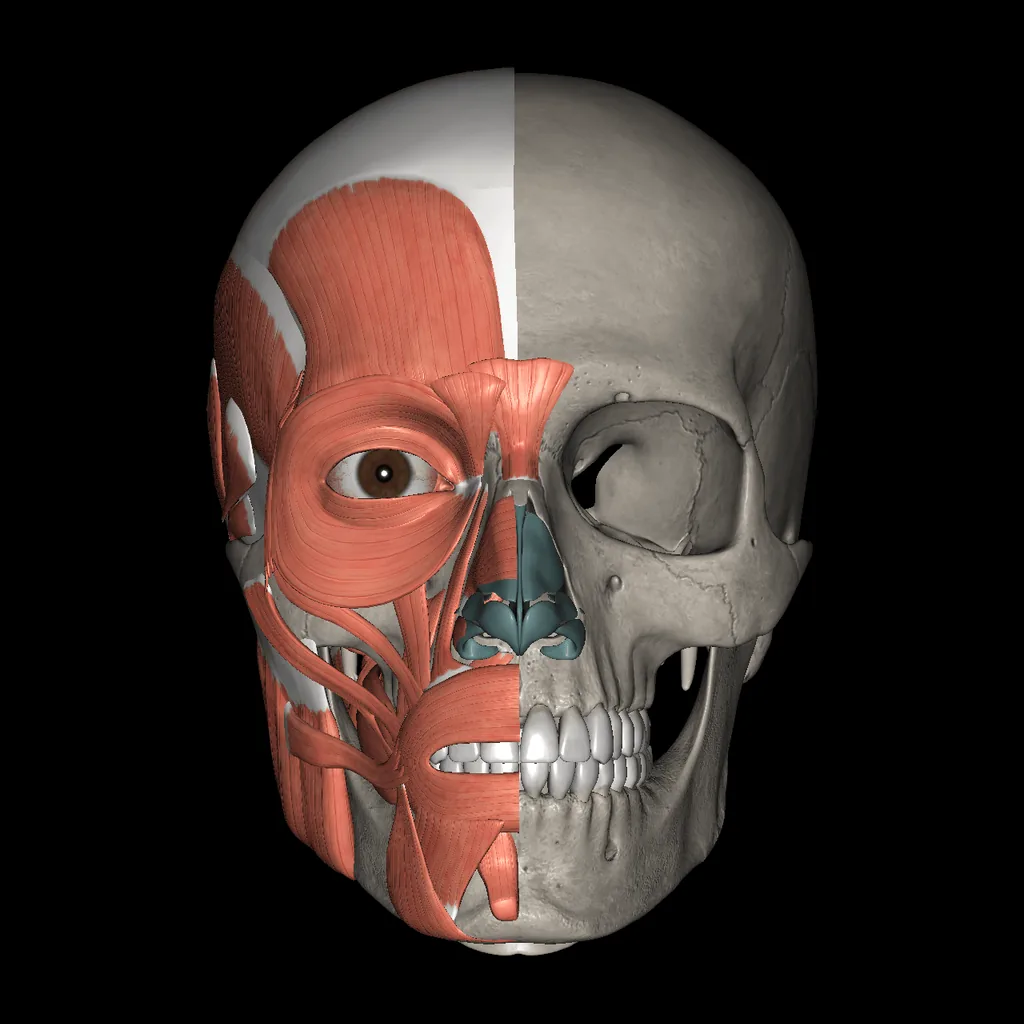
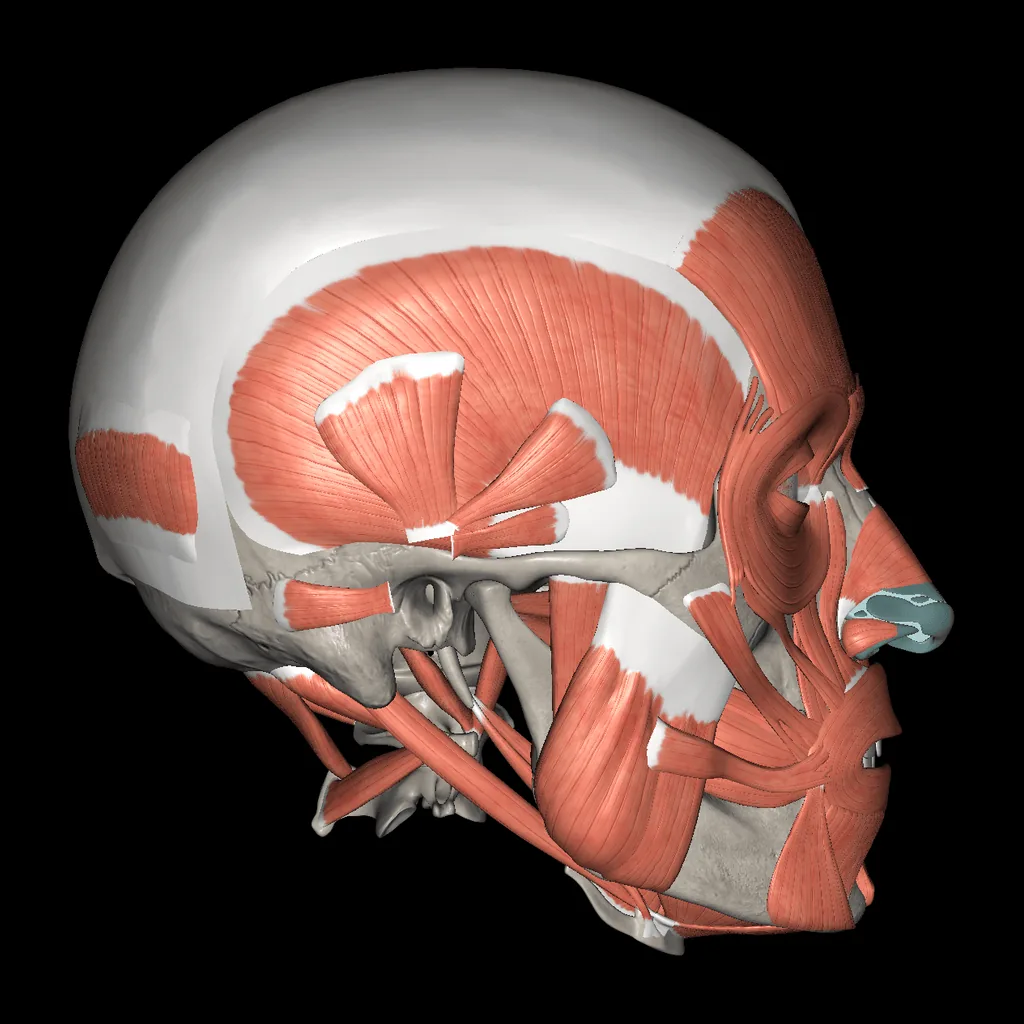
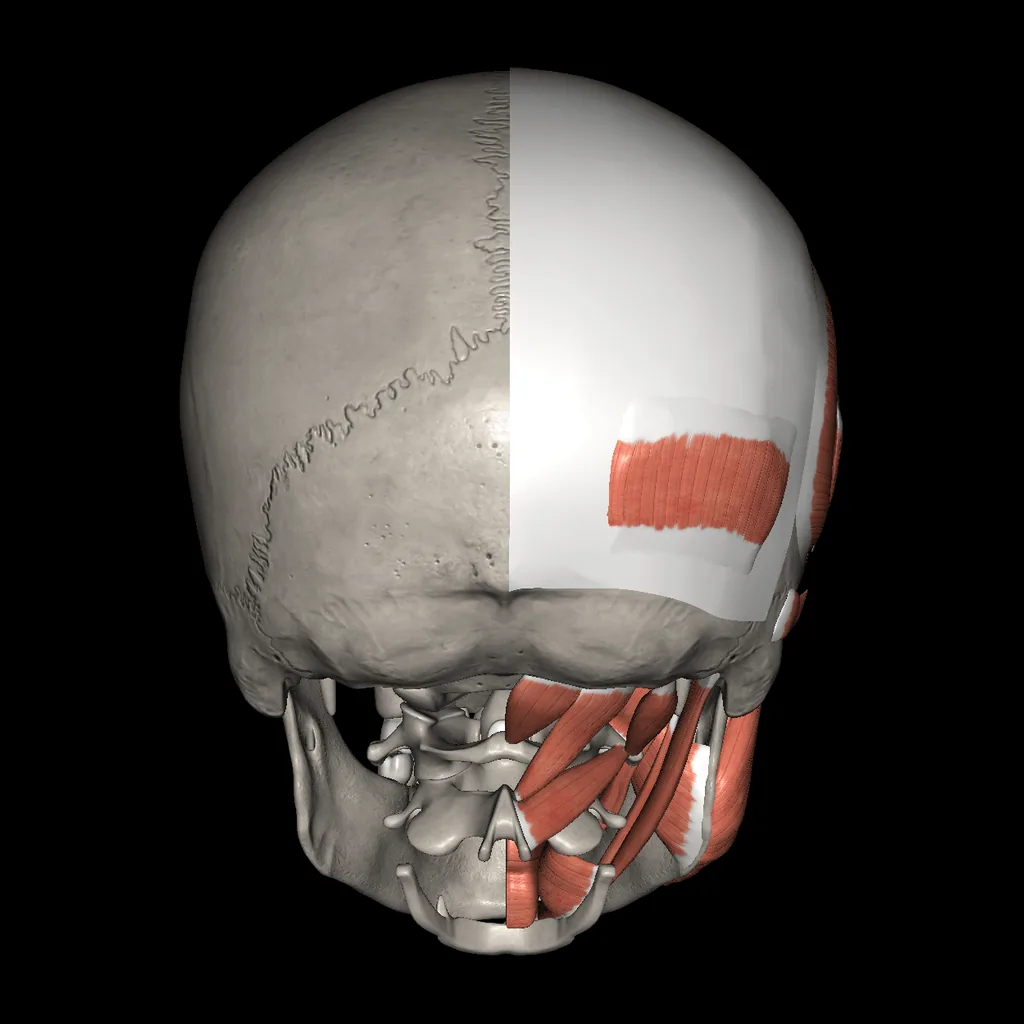
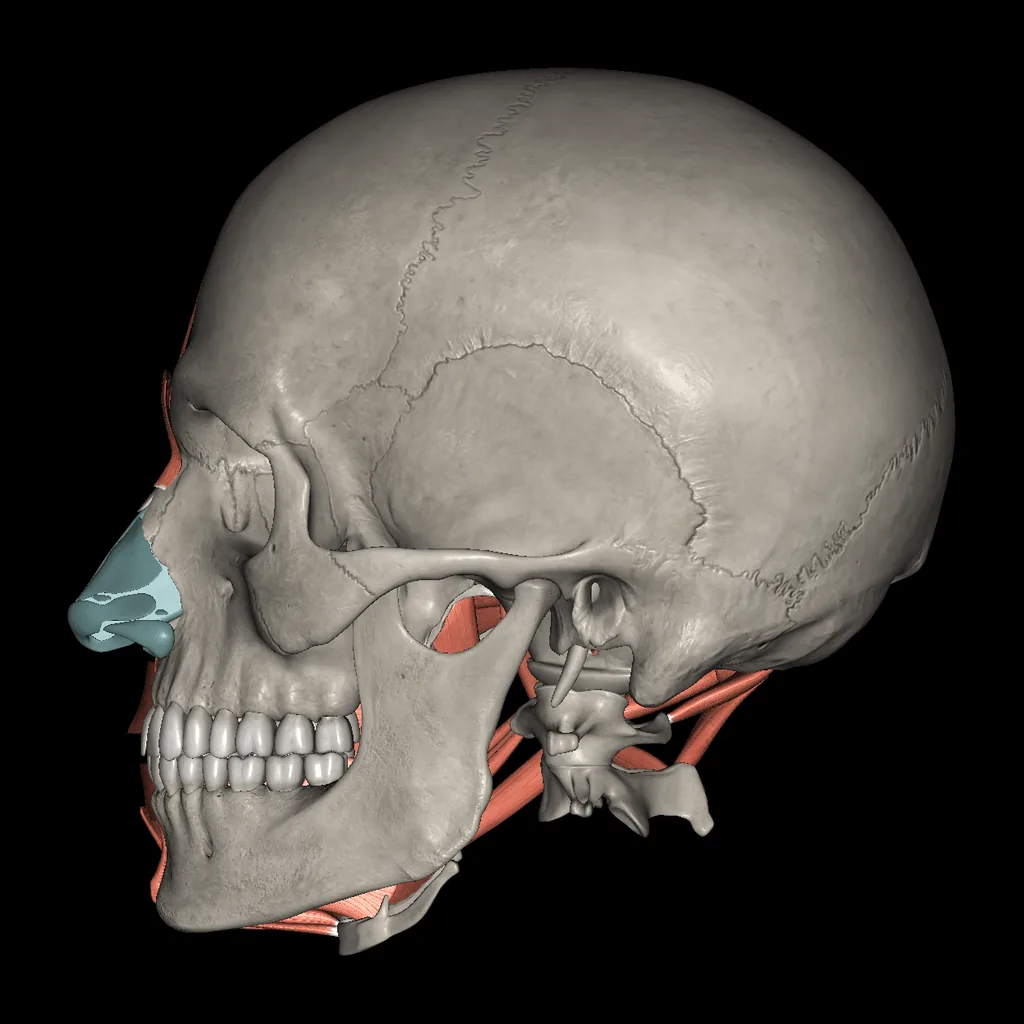
Skull and mandible with the muscles of facial expression and mastication, together with the nasal cavity and the eyeball.
The facial muscles arise from bone or fascia and insert into the skin, which allows them to move the lips, eyelids and nose; they are all innervated by the facial nerve (CN VII). The masseter, temporalis and pterygoid muscles act on the temporomandibular joint to elevate, depress and move the mandible sideways, and are supplied by the mandibular division of the trigeminal nerve (CN V3).
Systems in this model
- Bones
- Muscles
- Respiratory
- Eye
Related Models
A list of the most relevant models related to Head (Muscles and bones)